
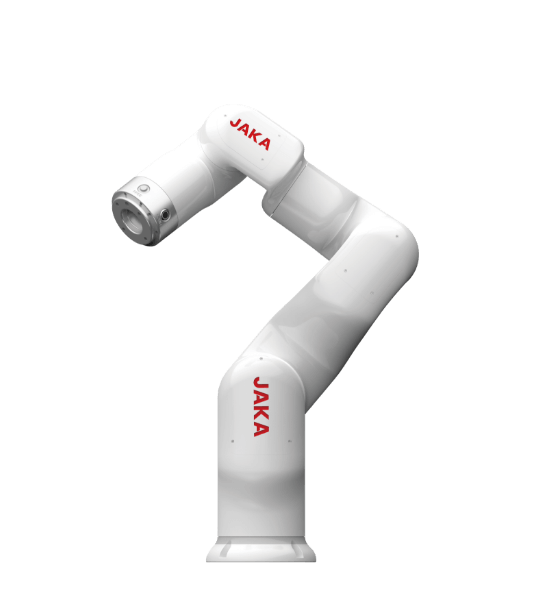
As industries pursue sustainable growth, energy efficiency has become a key factor in automation decisions. Modern production robots are designed not only for productivity but also for optimized energy consumption during long operating cycles. Compared to a traditional industrial robot arm, newer collaborative systems emphasize lightweight construction and intelligent control to reduce power usage. JAKA develops advanced robotic solutions that integrate efficient motion planning and streamlined hardware design, helping businesses maintain continuous operation while managing energy costs effectively.
Optimized Motion and Intelligent Control
Energy efficiency in production robots often begins with how they move. Smooth acceleration, precise path planning, and adaptive speed control reduce unnecessary power consumption. An industrial robot arm that operates with optimized trajectories can complete tasks using less energy without sacrificing performance. JAKA systems apply advanced control algorithms to ensure that each industrial robot arm operates efficiently under varying workloads. This intelligent approach allows production robots to maintain consistent output while minimizing wasted energy.
Lightweight Design and Reduced Power Demand

Another important factor is structural design. Production robots with lighter bodies require less energy to operate, especially in high-frequency tasks. Unlike a conventional industrial robot arm built for heavy-duty applications, modern systems prioritize compactness and efficiency. JAKA incorporates lightweight materials and compact architectures into its robotic designs, enabling production robots to achieve high performance with lower energy requirements. This design philosophy supports both sustainability goals and operational efficiency.
Continuous Monitoring and System Optimization
Long-term energy efficiency depends on monitoring and ongoing optimization. Production robots equipped with real-time diagnostics can track energy usage, detect inefficiencies, and adjust performance accordingly. An industrial robot arm integrated into a connected system can provide valuable insights into energy consumption patterns. JAKA supports seamless integration with factory management systems, allowing businesses to analyze and refine how production robots operate. Through continuous improvement, companies can achieve stable, energy-efficient automation in demanding production environments.
