
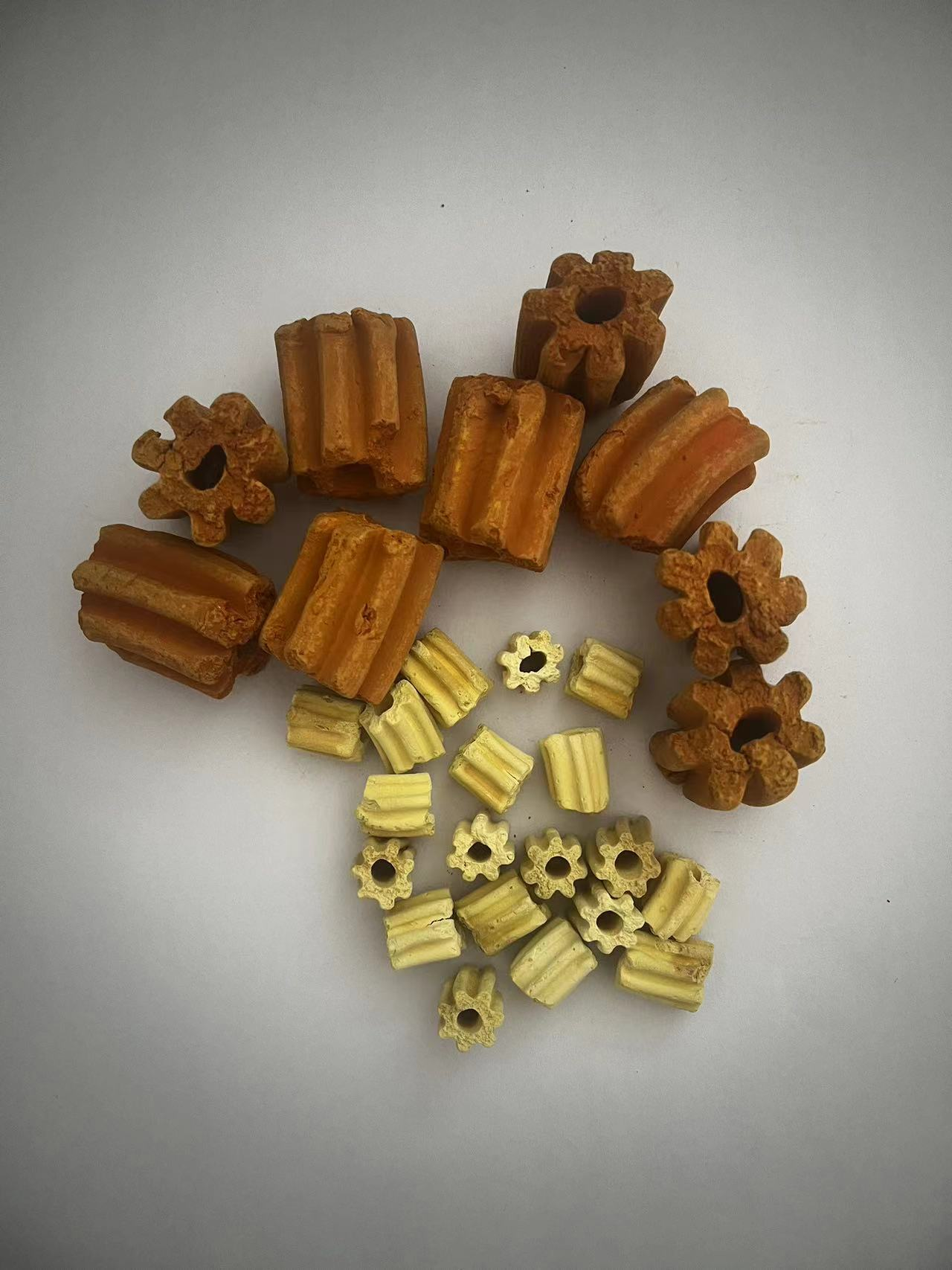
A sulfuric-acid catalyst’s continuous temperature range and a DPF’s regeneration heat exposure describe different operating duties in service. In a sulfuric acid plant, the number may describe thermal stability of a material used for SO₂ oxidation. In diesel exhaust, filter temperature is tied to soot accumulation, regeneration, and the survival of a porous wall-flow structure. The underlying duties differ.
Both a sulfuric acid catalyst and a dpf filter encounter heat, but their performance questions start in different places. The industrial reactor needs sustained conversion within a specified process window.

The filter must retain particles while exhaust flows through its walls and while soot is periodically removed. Comparing them requires reading each temperature statement with its reaction, material, and test condition attached.
Read the Industrial Temperature Window
SO₂-to-SO₃ oxidation in sulfuric-acid production is an ongoing catalytic reaction. Feed composition, gas temperature, contact time, and bed design influence conversion. An operating window identifies the temperatures in which a grade is intended to function continuously. It is different from a one-number thermal-stability value, which concerns the material’s ability to withstand a stated exposure.
A sulfuric acid catalyst selection also depends on the reactor’s actual temperature profile. Gas may enter successive beds at different conditions, and operating deviations can expose material to a hotter or cooler interval than planned. A grade whose listed range appears suitable on paper still needs an application assessment for the proposed SO₂ loading, flow, and converter arrangement.
A thermal-stability value of 650°C should not be treated as the recommended continuous operating temperature. In sulfuric acid production, sustained SO₂ oxidation must follow the specified operating range for the selected catalyst grade. Temperature excursions require separate assessment because exposure duration, feed composition, and reactor conditions can affect catalyst performance.
For Hualian Catalyst ‘s V-series grades, the specified continuous operating ranges are 400–630°C for V201-M and V208-M, and 370–630°C for V212-M. The comparison model VK48 shown under V208-M is listed separately at 410–550°C. V201-M, V208-M, and V212-M each have a listed thermal-stability value of 650°C, distinct from their continuous operating temperature ranges. The grade ranges therefore distinguish intended operating conditions even though the stability entry is shared. Neither number alone proves conversion under an unspecified plant gas composition.
Follow Heat through the DPF
The diesel filter’s basic action is physical: alternate channels are blocked so exhaust crosses porous ceramic walls and deposits soot. Pressure increases as material accumulates, making regeneration part of the operating cycle. Heat can help oxidize soot, but an excessive or uneven temperature rise can threaten the filter body and its housing.
For its dpf filter range, Hualian describes Cordierite and SiC wall-flow materials for sustained hot exhaust service. SiC is highlighted for thermal conductivity and mechanical strength. Those characteristics can matter when regeneration produces local gradients. The product information does not provide a universal temperature window comparable with the industrial V₂O₅ grade ranges.
Local overheating can damage suitable ceramic. Filter dimensions, soot distribution, canning, sensor location, and regeneration control affect the temperature reached in individual regions. A high-conductivity ceramic may spread heat differently, yet the assembled unit still needs validation under the engine’s flow and soot-loading pattern. The system’s pressure limit must be respected before and after regeneration.
Soot-oxidation temperature changes during service; it is not an industrial bed’s fixed catalytic reaction setpoint. Exhaust heat can oxidize soot during passive regeneration; a cooler duty cycle may require deliberate heating to clear the filter. Either route can create a different thermal profile from steady cruising. A single inlet reading may not reveal the hottest part of the filter.
Compare Evidence without Transferring Numbers
The industrial and automotive products can be placed in one review only if their measurements remain separate. For the sulfuric-acid grades, the file needs continuous range, stability statement, intended SO₂ conversion duty, and the actual plant gas profile. For the filter, it needs material, regeneration events, soot load, pressure history, and structural condition after exposure.
The labels “high temperature” and “thermal stability” conceal different time scales and failure modes. A plant catalyst is judged for sustained chemical activity and material integrity in its reactor. A filter is judged for capture, recoverable pressure, and the ability to survive repeated thermal events. A stability number for one product cannot certify any of those filter outcomes.
An excursion may be brief, but its cause and duration matter. A filter can see short regeneration peaks while its average exhaust temperature remains moderate. Neither case is described fully by one maximum value.
Testing should also name where temperature was measured. A gas-inlet sensor, a bed thermocouple, and a filter-wall estimate refer to different physical locations. Their values cannot be interchanged as though the entire component were at one uniform temperature. Measurement position and exposure duration belong beside each reported maximum.
The useful comparison is a disciplined reading of two specifications, not a contest over the largest temperature number. For Hualian’s V201-M, V208-M, and V212-M grades, the continuous operating temperature limits and the separate 650°C thermal-stability specification describe different requirements. Diesel DPF performance must instead be checked using engine-specific filtration and regeneration data. Heat matters in both applications only through the duty it changes and the component it can damage.
