
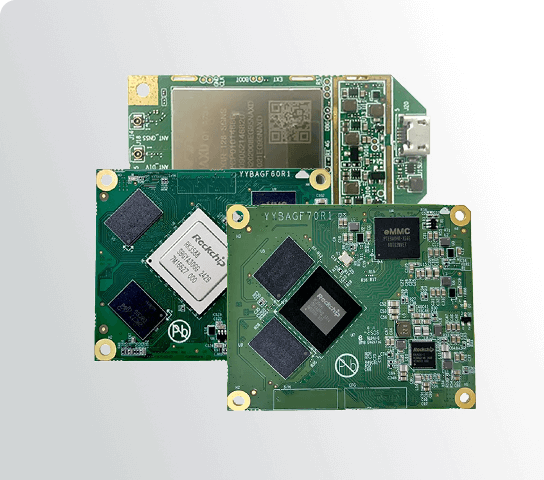
Intelligent devices are no longer simple embedded products. OEM manufacturers are now expected to deliver equipment that can process data locally, support AI functions, maintain reliable connectivity, and provide smarter user experiences within compact hardware designs.
This shift creates a difficult engineering challenge. Building a complete computing platform internally requires significant investment in processor integration, board design, software support, and system validation.

A Qualcomm SOM provides an alternative approach by allowing OEM teams to adopt a pre-integrated computing foundation and focus their resources on the product functions that differentiate their solutions.
The reason many OEMs are considering Qualcomm SOM is not only processing capability. The larger advantage comes from reducing development complexity while creating a scalable foundation for intelligent products.
OEMs Are Facing a New Hardware Development Bottleneck
The development requirements for intelligent devices have changed significantly. A modern industrial terminal, smart camera, robotics system, or connected healthcare device may require AI processing, multimedia capability, wireless communication, and edge computing performance at the same time.
Previously, product teams could create customized hardware around relatively simple computing requirements. Today, integrating advanced processors into a reliable commercial product requires much deeper expertise.
Engineering teams must consider processor selection, memory configuration, power management, thermal design, operating systems, and software optimization. Each decision can affect product performance and development schedules.
For many OEM manufacturers, the challenge is not creating a unique product concept. The challenge is building a reliable computing foundation quickly enough to meet market requirements.
A system on module manufacturers approach helps address this issue by moving complex computing integration into a standardized module. The OEM can then concentrate on product-specific design, application software, and customer requirements.
Building the Whole Computing System Is No Longer the Fastest Product Strategy
Fully customized hardware still has value for certain applications, but it often requires longer development cycles. Every new product generation may require additional engineering effort to redesign and validate the computing platform.
SOM-based development changes this workflow. Instead of designing the processor subsystem from the beginning, OEM teams can start with a module that already integrates essential computing components.
A Qualcomm SOM combines Qualcomm processing technology with a compact module architecture, allowing developers to create customized carrier boards around their application requirements.
For example, an OEM developing an intelligent industrial inspection device can focus on camera integration, application software, and system functionality while using the SOM as the core computing engine.
This approach is particularly valuable for companies developing multiple product models. A shared module platform can support different product variations while maintaining a consistent software and hardware foundation.
The adoption of modular computing is therefore driven by product development efficiency rather than simply replacing traditional hardware design methods.
Qualcomm SOM Helps OEMs Move Advanced Computing Into the Product Faster
One major reason OEMs select Qualcomm SOM solutions is the ability to introduce advanced computing functions without building every layer internally.
Intelligent devices increasingly require local processing capabilities. Applications such as machine vision, voice interaction, smart monitoring, and edge analytics depend on computing resources available directly inside the device.
A Qualcomm som platform can provide OEM developers with a foundation for integrating these intelligent features while maintaining compact product designs.
The module architecture also helps simplify engineering coordination. Hardware teams can work on mechanical design and interfaces while software teams begin application development using an established computing environment.
This parallel development process can shorten product validation cycles. Instead of waiting for a complete custom board, teams can evaluate system concepts earlier and identify design adjustments before entering mass production.
For OEMs competing in markets where product cycles are becoming shorter, reducing development uncertainty becomes a major advantage.
The Real Reason OEMs Select SOMs Appears During Product Scaling
The value of a SOM architecture becomes clearer after the prototype stage. OEM manufacturers must consider how a product will evolve after initial launch.
Intelligent devices often require future improvements, including additional software functions, enhanced connectivity, or expanded AI capabilities. A flexible computing platform provides more room for these changes.
Different industries benefit from this scalability. Industrial equipment manufacturers may use SOM-based designs for intelligent control terminals or edge devices. Healthcare companies may integrate them into connected medical equipment. Commercial equipment developers may apply them to smart displays and interactive systems.
The common requirement is maintaining product flexibility without repeatedly redesigning the core computing architecture.
For OEMs, this means a Qualcomm SOM is not only a development shortcut. It becomes part of a longer-term product strategy that supports different versions, market expansions, and technology upgrades.
Qualcomm SOM Selection Is About More Than the Processor
Although processor capability is an important factor, OEM manufacturers evaluate more than silicon performance when selecting a SOM platform.
They also consider development support, customization options, software ecosystem compatibility, and long-term availability. These factors influence whether a product can move smoothly from prototype development into commercial production.
Working with experienced system on module manufacturers can help OEM teams address integration challenges, including carrier board development, system optimization, and deployment preparation.
With modular embedded computing platforms, Vantron enables OEM developers to build intelligent products while adapting hardware configurations to specific application requirements.
The growing adoption of Qualcomm SOM among OEM manufacturers reflects a broader change in embedded product development. As intelligent devices become more advanced, companies need hardware approaches that reduce complexity while supporting innovation.
For OEMs, the decision to choose Qualcomm SOM is ultimately about creating a faster and more reliable path from product concept to market-ready intelligent device.
