
Industrial manufacturing enterprises navigating competitive global markets frequently encounter a pivotal strategic decision: how to identify and partner with the ideal production equipment provider. Procurement managers often ask what criteria truly separate a dependable equipment vendor from ordinary suppliers when scaling operations.
The choice of rubber machinery supplier directly determines long-term production efficiency, material stability, and finished product durability across rigorous industrial scenarios. This evaluation process requires comprehensive assessment of technical strength, customized engineering capability, and complete after-sales service system, rather than simply focusing on initial equipment purchase cost.

Many manufacturers make the common mistake of prioritizing low procurement prices over comprehensive equipment performance and service quality, only to face unstable operation, high failure rates, and excessive energy consumption in mass production, which substantially increase hidden operational costs and hinder long-term factory expansion. Stable and standardized machinery performance also helps factories comply with modern industrial safety codes and consistent quality management systems for mass production.
Verify Supplier Qualifications and Global Industrial Credentials
When industrial buyers begin their assessment, examining the operational heritage and technical credentials of prospective partners is essential. Organizations looking for mature solutions typically prioritize suppliers with verified international quality certifications, proven engineering expertise, and an established global footprint spanning numerous regions.
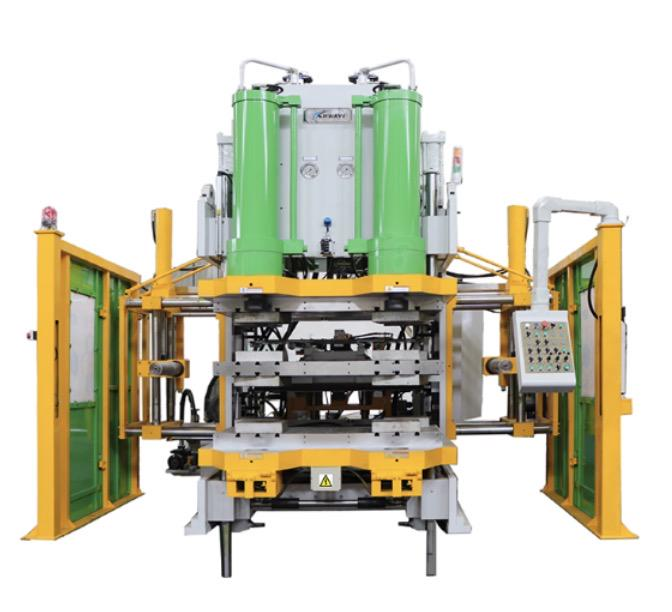
For instance, reputable rubber injection molding machine manufacturers often carry long-standing industry experience supplying robust production equipment to customers worldwide. Reliable vendors commonly operate dedicated in-house R&D facilities, follow strict internal quality control workflows, and comply with widely accepted safety standards to align their machine designs with common industrial performance requirements.
HWAYI continues to support global industrial partners with reliable technologies tailored to evolving market demands. Professional qualification systems and standardized factory inspection procedures help sustain equipment stability, safety, and consistency in diverse and harsh production environments.
Customization Capabilities and Engineering Adaptability
Standard off-the-shelf machinery rarely satisfies every unique production specification, particularly when manufacturing advanced elastomer components or complex geometries. Plant managers frequently wonder how suppliers handle customized engineering requests and specialized tooling adjustments.
A qualified rubber machine manufacturer should collaborate closely with engineering teams to optimize clamping forces, heating parameters, and mold configurations. This collaborative approach supports smoother integration with existing factory workflows and leaves room for future polymer processing technology upgrades.
Furthermore, evaluating production techniques through resources such as a detailed
rubber track vs steel track vulcanizing press comparison helps technical teams select the most appropriate vulcanization method for heavy-duty operational demands. Flexible customization capabilities allow manufacturers to quickly adapt to personalized product orders, accelerate product iteration, and enhance market responsiveness in the increasingly diverse elastomer processing industry.
Industry-Specific Application Strength and Practical Production Experience
Examining real-world application scenarios offers clear insight into a supplier’s true manufacturing capabilities. Within the modern automotive aftermarket sector, enterprises face stringent demands when producing components such as sealing strips, dust boots, door seals, and O-rings. These vital parts require exceptional dimensional stability, superior tensile strength, and resistance to harsh environmental stressors encountered under the hood or along vehicle body panels.
Equipment built for these applications benefits from precise injection control and steady clamping pressure, which helps limit flash and reduce the chance of internal defects.
Partnering with an experienced rubber injection molding machine manufacturer ensures that production lines maintain consistent output quality, helping automotive suppliers meet rigorous original equipment manufacturer (OEM) standards standards.
Energy and power transmission manufacturing presents rigorous technical thresholds for rubber molding equipment. Key industrial components such as electrical insulators, lightning arresters, hollow bushings, and T-type connectors serve foundational safety functions within high-voltage grid systems. These mission-critical parts require flawless internal structure and uniform vulcanization, as subtle material defects may undermine overall electrical stability in power transmission networks.
Selecting well-built large-scale vertical injection equipment from an experienced rubber machine manufacturer helps power manufacturers sustain stable dielectric performance and comply with strict industrial safety standards.
When equipment providers possess deep cross-industry domain knowledge, they can anticipate potential manufacturing bottlenecks and offer tested mold configurations that significantly accelerate time-to-market for complex electrical components.
After-Sales Service, Maintenance and Long-Term Partnership Support
Equipment acquisition represents only the initial phase of a successful industrial relationship. Even advanced machinery requires routine maintenance, timely spare parts replacement, and occasional software calibration. A primary concern for B2B procurement professionals is the responsiveness and technical competency of a supplier’s after-sales service team. Delays in troubleshooting can lead to costly operational downtime and missed delivery deadlines.
Working with established global providers guarantees that expert engineers remain accessible for remote diagnostics or on-site assistance. Additionally, comprehensive operator training during installation minimizes human error and maximizes equipment lifespan across years of continuous industrial utilization. Complete after-sales systems effectively resolve operational difficulties for manufacturers, stabilize continuous production schedules, and reduce long-term equipment maintenance expenditures.
Conclusion: Build Stable and Competitive Manufacturing Partnerships
Ultimately, selecting the right equipment partner involves balancing technical specifications, customization potential, and reliable service. Well-established global suppliers with international reach, including providers such as HWAYI, can help industrial enterprises build stable, efficient production lines to support their long-term, sustainable business goals. Thorough evaluation of prospective partners helps turn capital investments toward lasting operational performance, equipping manufacturers to strengthen competitiveness within the shifting global marketplace.
