
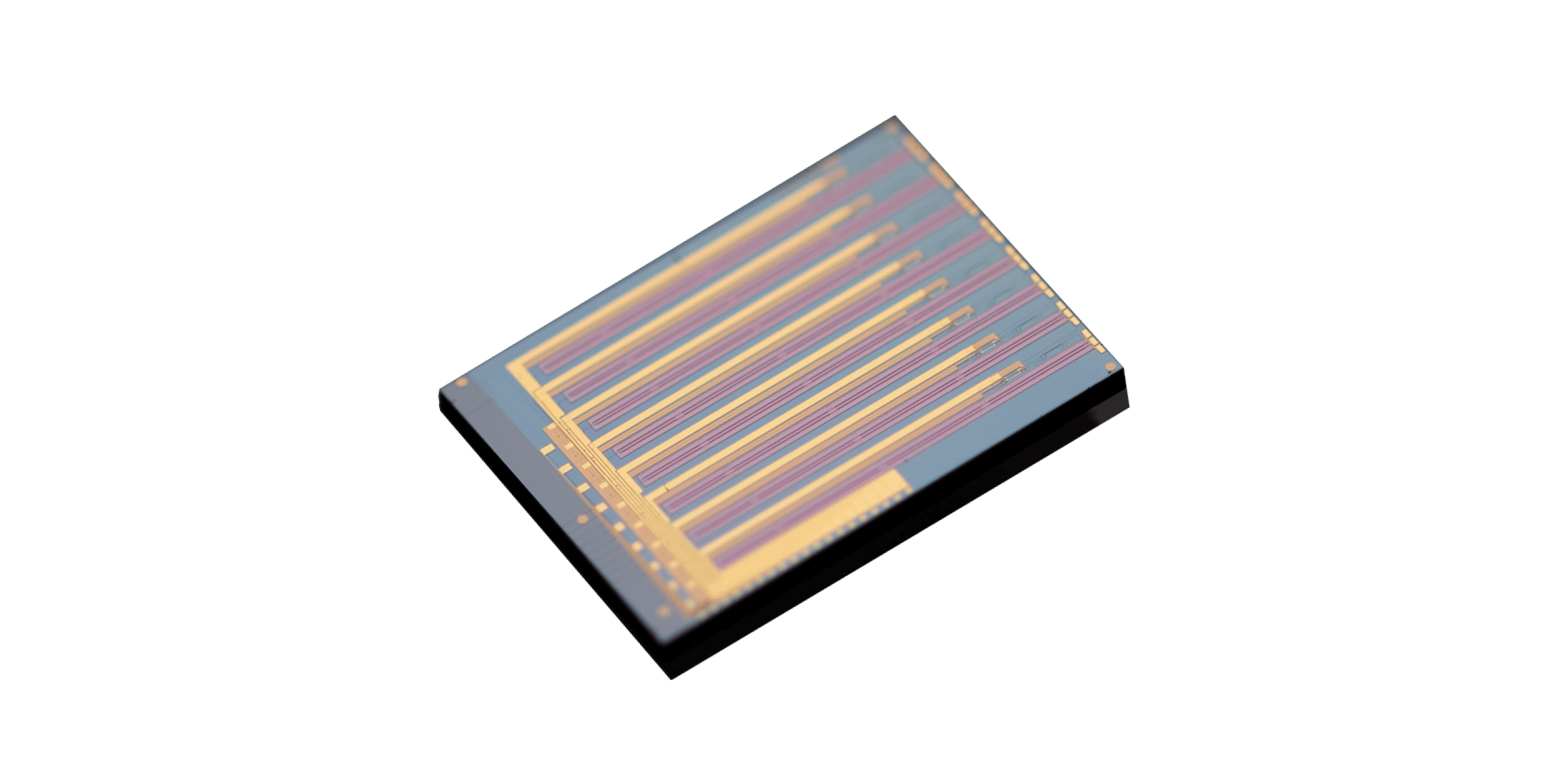
Procurement discussions often treat “photonic chip” and “optical chip” as though they identify two sharply separated product classes. In practice, suppliers, engineers, and market reports use the terms with considerable overlap.
They therefore begin a sourcing project by asking what the device actually does, which functions are integrated, and where its performance is measured. An optical chip may guide, split, filter, detect, or modulate light, while a photonic integrated circuit usually combines several optical functions on one substrate.

That difference is helpful, but it is not sufficient for a purchase decision. Packaging, coupling, electrical interfaces, wavelength range, and intended link architecture can matter more than the broad category printed on a page. They view TFLN chips as one material-platform example within this wider landscape.
Thin-film lithium niobate is used for high-speed electro-optic modulation, and published products cover direct-detection, coherent, and custom-integration formats. What matters is whether the implementation fits the commercial system that must be built and supported.
Terminology Becomes Useful When It Describes Function
Function provides a practical starting point. Some integrated devices perform one dedicated operation, whereas others combine multiple channels, interferometers, polarization functions, or modulation paths. They start by documenting the required optical transformation, then identify how many external components would still be needed around the die.
This prevents integration claims from being interpreted more broadly than the actual circuit. Material choice shapes the available trade-offs. In this section, TFLN chips are understood as electro-optic devices that use the properties of thin-film lithium niobate to control light at high speed.
Silicon and indium-phosphide platforms may offer different strengths in active integration, foundry scale, or component combinations, so they compare the complete platform rather than declaring a universal winner. The term photonic chips should also be connected to a reference plane.
A bare die specification may exclude fiber coupling, package loss, RF transitions, or thermal control, while a module figure can include all of them. Before comparing numbers, they ask where bandwidth, insertion loss, extinction ratio, and drive voltage were measured and whether the conditions resemble their planned assembly.
Specifications Reveal More Than a Category Name
Published examples illustrate why product context matters. A 3.2T DR8 device is listed with 110 GHz bandwidth, differential half-wave voltage below 1.5 V, and insertion loss below 14 dB including coupling. A 1.6T DR8/800G DR4 option uses a 70 GHz platform. These are not interchangeable parts merely because both are called optical chips. Coherent products create another comparison.
A 70 GHz polarization-division-multiplexed IQ device is specified with insertion loss below 7 dB and differential half-wave voltage below 4.5 V. When evaluating photonic chips for coherent links, they weigh phase control, polarization architecture, driver compatibility, bias management, and optical budget rather than focusing on aggregate transmission rate.
Custom integration may favor a bare intensity-modulator die listed at 110 GHz, insertion loss below 5 dB, half-wave voltage below 3 V, and extinction ratio above 20 dB. Here, TFLN chips can give the module designer more control over packaging and electronics, but they also transfer more assembly risk, test responsibility, and yield management to the buyer.
A Qualification Process Turns Labels into Purchasing Evidence
Their request for quotation separates mandatory limits from informative typical values. They specify wavelength, modulation format, bandwidth definition, loss boundary, voltage convention, polarization assumptions, connector or coupling arrangement, and environmental range.
For photonic chips, this level of detail makes quotations comparable and exposes gaps that broad terminology would otherwise conceal. Sample qualification then reproduces the intended electrical and optical environment. They test TFLN chips with representative drivers, fibers, temperatures, bias controls, and receiver conditions.
Lot-to-lot data matters because a laboratory result from one selected unit cannot demonstrate manufacturing consistency. Process-change notification and traceability are therefore included in the commercial review. Finally, they compare the cost of the complete usable solution. A lower die price may be offset by difficult coupling, extra control electronics, long calibration, or low assembly yield.
Conversely, greater on-chip integration can reduce external parts but increase dependence on one supplier or package. The preferred category is the one that produces predictable system economics and serviceability. Terminology also affects contract scope.
They state whether the purchase includes design support, known-good-die screening, coupling guidance, package models, or fabricated hardware. Clear scope prevents both parties from assuming that an integrated-product label automatically includes every service needed for successful module development.
For buying teams, the distinction between an optical chip and a photonic integrated circuit is a useful orientation tool, not a final selection rule. They make better-informed decisions by translating names into functions, interfaces, measured boundaries, and production responsibilities. This approach also gives engineering and procurement groups a shared language for reviewing trade-offs.
A practical evaluation should end with a scored comparison covering system performance, integration effort, qualification evidence, supply continuity, and lifecycle support. That record can be reused when data rates change or a second source is considered, reducing the chance that future teams repeat the same terminology debate without learning from earlier measurements.
Labels such as photonic chip or optical chip matter less than a precise description of function, package scope, and interface responsibility. Comparing Liobate options through that description keeps qualification effort and lifecycle cost visible to the buyer.
