
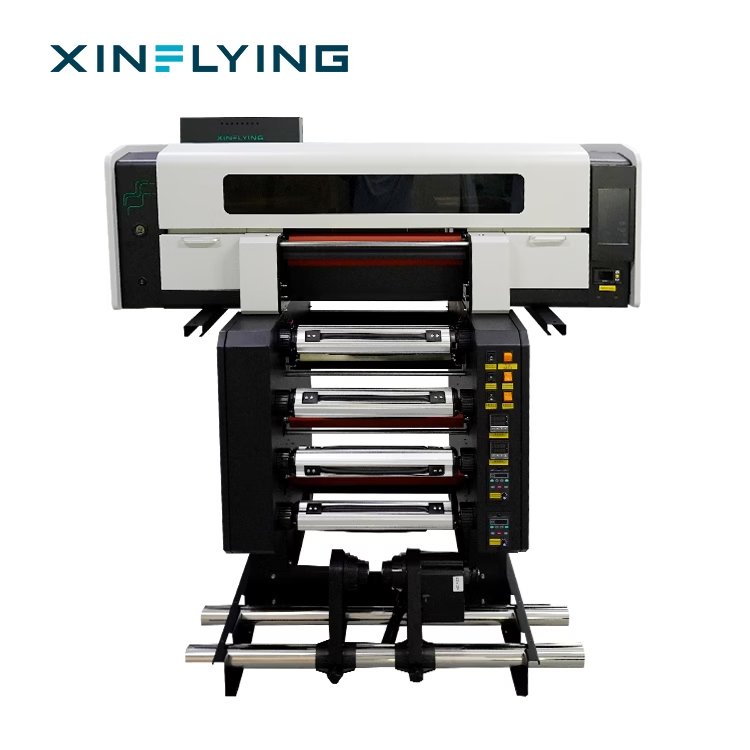
Commercial printing businesses must balance equipment investment, production efficiency, and product quality when selecting a UV DTF printer. Although two machines may appear similar, differences in printhead configuration, working width, automation, and finishing capabilities can lead to substantial price variations. Understanding these cost factors helps buyers compare equipment objectively and select a solution that fits their production requirements and long-term business plans.
Printhead Configuration and Printing Performance

Printheads are among the most important components influencing equipment costs. Their technology, quantity, and compatibility with different ink channels affect image quality, printing speed, and maintenance requirements. Machines with multiple industrial printheads generally require a higher initial investment, but they may offer greater production capacity for businesses handling regular commercial orders.
Buyers comparing a UV DTF printer manufacturer should examine the actual printhead model rather than relying on general descriptions such as high precision or professional quality. They should also consider the availability of replacement parts, maintenance support, and the manufacturer’s guidance on printhead care.
For example, Xinflying’s 420ST Gold Stamping 16.5-inch All-in-one UV DTF Printer uses four Epson i1600-U1 printheads. Its published specifications list a printing speed of 3.5 m²/h in 8-pass mode, making the stated operating configuration an important reference when evaluating production requirements.
Printing Width and Production Capacity
Printing width determines how much transfer material can be processed across a single pass. A wider working area can accommodate larger designs or multiple smaller graphics arranged together, potentially improving material utilization and reducing the number of production cycles.
However, a wider machine may also require a larger frame, more complex material handling, and additional workspace. Businesses should therefore evaluate expected order sizes and product dimensions before paying for capacity they may not use.
The 420ST offers a 16.5-inch printing width and integrates printing with additional finishing functions. This configuration may suit small and medium-sized print businesses producing customized labels, premium packaging graphics, crafts, and promotional products. Its suitability depends on the buyer’s order volume, artwork dimensions, and required output quality.
Automation and Integrated Finishing Functions
Automation is another major factor behind differences in commercial equipment costs. Entry-level systems may require operators to handle several production stages separately, while integrated machines combine multiple operations into a coordinated workflow.
Automation can reduce repetitive manual work, simplify routine production, and help businesses maintain consistency across orders. Nevertheless, the financial value depends on actual labor savings and how frequently the additional functions are used.
The Xinflying 420ST combines UV printing, foil stamping, waste removal, and laminating in one production workflow. Its seven-inch touchscreen and one-key operation simplify daily use. A vacuum suction platform, automatic film peeling system, and printhead anti-collision protection provide additional operational support.
For businesses producing metallic-effect labels or premium customized products, these integrated functions may reduce the need for separate finishing equipment. Buyers should compare the complete workflow rather than evaluating the printer’s purchase price alone.
UV Curing, Adhesion, and Transfer Stability
A printer’s curing and material-handling systems also affect its overall value. UV curing performance influences ink solidification, while transfer stability depends on factors such as film handling, alignment, and compatibility between inks and consumables.
A lower-cost machine may appear attractive initially, but inconsistent transfers or frequent production interruptions can increase waste and labor expenses. Buyers should assess print samples using their intended materials and designs before making a final decision.
The 420ST features air-cooled UV lamps and an intelligent heated base plate designed to support foil bonding and print durability. These features are relevant to applications requiring metallic finishes and detailed graphics. Actual results still depend on compatible films, operating conditions, artwork, and correct machine settings.
Consumables, Maintenance, and Operating Expenses
The purchase price represents only one part of the total cost of ownership. UV inks, AB transfer films, hot-stamping materials, cleaning supplies, replacement components, electricity, and labor all contribute to operating expenses.
Consumable usage varies with artwork coverage, white ink and varnish requirements, production settings, and material waste. Businesses should request realistic consumption estimates based on representative jobs rather than relying solely on theoretical production figures.
Maintenance arrangements deserve similar attention. Buyers should clarify warranty coverage, replacement-part availability, technical support, installation assistance, and operator training before purchasing. These services may affect both operating costs and production continuity.
When comparing UV DTF printer price options, procurement teams should calculate expected costs per saleable transfer or completed order. This approach makes it easier to compare machines with different capabilities and identify whether a higher initial investment could be justified by lower labor requirements or reduced waste.
Supplier Support and Equipment Customization
The supplier’s technical capabilities can influence both the initial quotation and the long-term ownership experience. Equipment packages may differ in software, installation, training, spare parts, and after-sales support, so buyers should verify exactly what each quotation includes.
Buyers should compare the technical documentation, spare-part availability, and service terms included in each quotation. Businesses purchasing internationally should also account for shipping, import duties, installation arrangements, and local service availability.
Xinflying positions its printing equipment for commercial applications that include customized products, labels, and packaging. Its 420ST combines UV printing with gold stamping, offering a specialized option for businesses seeking metallic decoration without separating every finishing stage into an independent process.
Make the Investment Based on Production Needs
Choosing commercial printing equipment requires more than finding the lowest quotation. Printhead configuration, working width, integrated functions, curing performance, consumable consumption, and technical support all contribute to the equipment’s overall value.
A careful comparison of UV DTF printer price options should begin with expected production volume, target applications, and total operating costs. By reviewing verified specifications and requesting application-specific samples and quotations, buyers can make more informed decisions.
For businesses exploring premium label and packaging production, Xinflying’s 420ST Gold Stamping 16.5-inch All-in-one UV DTF Printer is one option worth evaluating when integrated printing and metallic finishing align with their commercial requirements.
