
Parking areas collect more than visible litter. Dust, sand, leaves, packaging scraps, tire debris, and fine particles can build up around curbs, entrances, ramps, and loading zones. For commercial facilities, cleaning equipment should match the site size, surface condition, traffic pattern, and cleaning frequency. Choosing the right parking lot sweeper can reduce repeated manual work and make daily cleaning more organized.
Equipment choice also affects how crews handle narrow corners, long lanes, pedestrian paths, and dusty areas. Before selecting a machine, facility managers should review debris types, collection points, cleaning time, and whether water-assisted cleaning is suitable.
Why Parking Areas Need Different Cleaning Methods

A parking lot is not a uniform surface. Open driving lanes are easy to reach, while curb edges, corners, columns, ramps, wheel stops, and pedestrian paths create narrow sections. Debris also changes with the season. Dry dust may dominate in warm periods, while leaves, mud, and wet dirt can appear after rain.
For this reason, parking lot sweeping should begin with a site assessment. Facility teams can divide the area into open zones, tight zones, entrances, pedestrian sections, and high-debris points. This makes it easier to decide where a ride-on machine is useful and where targeted collection or manual tools may still be required.
Surface type matters as well. Smooth concrete, textured pavement, coated floors, and outdoor asphalt behave differently. Operators should consider how dust moves, whether water can be used, and whether loose debris gathers along edges. These points affect brush use, vacuum collection, flushing, and dust control.
Key Equipment Features to Compare
Cleaning width is important, but it should not be the only selection point. Facility managers should also compare turning space, machine footprint, debris collection method, water use, battery runtime, noise level, and operator visibility. A machine that fits open lanes but struggles around columns may create extra follow-up work.
Vacuum capability is useful where fine dust is common. Water-spray cleaning and misting can help limit airborne particles. High-pressure flushing can loosen attached dirt. Turbine blowing and targeted tube collection may also help around edges or places that the main cleaning path cannot reach easily.
Runtime should be compared with the actual work cycle. A large facility may require several cleaning rounds, while a smaller site may be completed in one shift. Charging arrangements, cleaning windows, and operator handover should therefore be considered together.
Matching Machine Size to Facility Layout
Larger equipment can cover open space efficiently, but parking structures often include narrow lanes, ramps, pillars, and pedestrian routes. Compact machines may be easier to position and may reduce repeated reversing around fixed obstacles.
This is where a parking lot sweeper should be evaluated by maneuverability as well as coverage. Operators need enough room to turn, approach curb lines, and pass parked vehicles safely. Facility managers can review turning paths before purchase and compare them with the actual geometry of the site.
For multi-level parking areas, slope conditions also matter. Cleaning routes may include ramps and different floor surfaces. Equipment selection should reflect the route rather than only total square footage.
A Practical Example for Mixed Cleaning Tasks
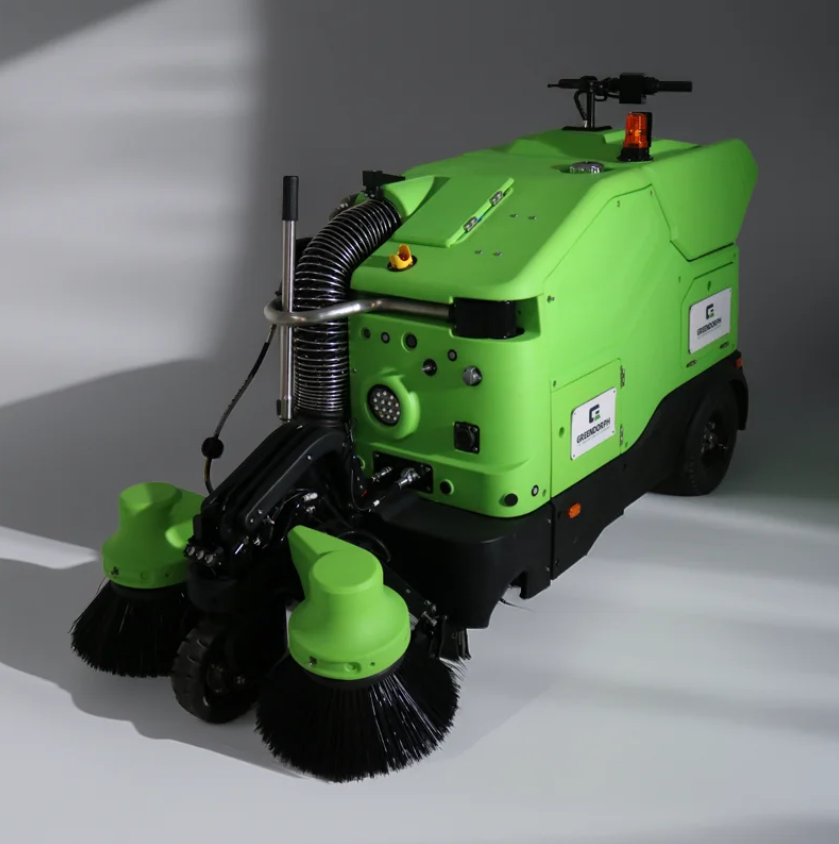
Some commercial sites need one machine to handle several cleaning jobs. In this context, Greendorph offers the Omniclean Urban Street Sweeper YJ80 as a ride-on cleaning machine for urban and facility environments. They position it for sidewalks, pedestrian plazas, parking structures, and mid-sized outdoor areas.
The YJ80 provides three operating modes: manual ride-on operation, auto-follow, and towed traction. Its system combines vacuum collection, high-pressure flushing, water-spray cleaning, turbine blowing, targeted tube collection, and dust-suppression misting. These functions allow crews to move between general surface cleaning and more focused debris removal without relying on several separate machines.
Its compact footprint is relevant to parking lot sweeping in spaces with columns, walkways, or tighter circulation zones. According to the supplied product information, the machine can operate for up to eight hours on one charge. It uses electric power, runs with low noise, and produces no direct operating emissions.
Daily Operation Matters as Much as Machine Selection
Suitable equipment still needs a practical cleaning route. Crews can remove large obstacles first, identify high-debris areas, and decide whether dry collection, water-assisted cleaning, or targeted suction suits each section.
Traffic timing is another practical issue. Cleaning during lower-traffic periods can reduce interruptions and give operators better access to parking bays and curb edges. Facility teams should also separate vehicle movement from cleaning paths where possible, especially near entrances, ramps, and loading areas.
Routine inspection is part of daily use. Brushes, suction paths, water nozzles, collection areas, batteries, and tires should be checked according to equipment instructions. Small maintenance issues can reduce cleaning quality and increase the time needed to complete a route.
Building a Practical Cleaning Plan
Commercial facilities should choose equipment by matching machine functions with the actual site. Layout, debris type, operating time, dust control, noise, and maneuverability all affect the cleaning process. A clear route can reduce repeated passes and make labor planning easier.
For facilities considering a flexible electric machine, Greendorph provides the YJ80 for mixed outdoor and parking-area cleaning tasks. They combine several cleaning functions in one compact ride-on platform, which may suit sites that need broad-area cleaning and targeted debris collection. Final selection should still be based on site measurements, route conditions, cleaning frequency, and the facility’s operating schedule.
