
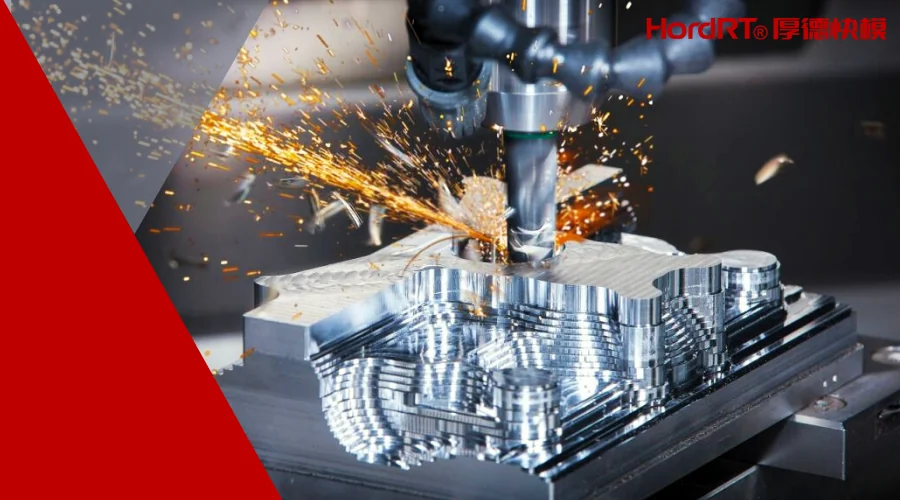
Traditional milling operations often struggle with severe thermal accumulation and excessive tool wear when carving complex aerospace components from hard metal blocks. Heavy cutting forces and slow feed rates push metal deformation into high-stress zones that distort delicate wall geometries and ruin expensive raw stock blanks.
Modern precision manufacturing facilities overcome these physical limitations by adopting high speed cnc machining protocols that radically transform material removal dynamics across difficult alloys. Harnessing ultra-rapid spindle rotations allows technicians to transfer thermal energy directly into departing chips rather than the parent workpiece.

Shifting operational mechanics minimizes thermal distortion and slashes secondary hand-finishing labor across complex metal components.
Maximizing Material Removal Rates Through Ultra-High Spindle Velocities
Conventional milling relies on heavy axial depths of cut that generate localized heat spikes and structural warping in thin-walled housings. Elevating spindle velocities while decreasing radial engagement fundamentally alters how cutting energy disperses through metallic alloys.
HordRT integrates advanced multi-axis machining centers capable of sustaining extreme rotational velocities without sacrificing dimensional precision under heavy load conditions. Modern control interfaces optimize acceleration curves to prevent mechanical shock during rapid directional changes and sudden vector reversals.
Rapid chip evacuation prevents hot metal swarf from re-cutting active tool paths, protecting delicate surface finishes from abrasive scratching. Aerospace and medical hardware manufacturers depend on this thermal efficiency to maintain strict structural tolerances under rigorous industrial standards.
Optimizing spindle kinematics establishes a stable baseline for high-integrity metallic component fabrication across demanding multi-batch production schedules. Continuous fluid coolant streams flush microscopic debris away instantly from active cutting zones to preserve cutting edge longevity.
Harnessing Adaptive Trochoidal Toolpaths for Constant Tool Load
Geometric complexity in modern engineering designs requires sophisticated computer-aided manufacturing strategies to prevent tool snapping and corner overloading. Traditional linear toolpaths create sudden spikes in radial engagement whenever cutters encounter sharp ninety-degree internal corners.
Advanced software eliminates these shock loads by generating smooth trochoidal and adaptive clearing trajectories around tight features. Toolpath programmers simulate every movement rigorously to eliminate micro-pauses that cause localized burning on sensitive metal surfaces during production.
Maintaining constant tool engagement ensures predictable cutting forces and prevents catastrophic tool breakage during aggressive pocket milling cycles. Utilizing high speed cnc machining routines alongside dynamic toolpaths maximizes material removal rates safely across titanium and hardened steels.
Operational continuity keeps production lines moving smoothly without unexpected machine downtime or ruined stock blanks. Advanced simulation tools verify cutter clearance angles thoroughly before live metal cutting commences on expensive material billets.
Ensuring Dynamic Balance and Concentricity
Operating spindles at twenty thousand rotations per minute or higher introduces severe dynamic balance challenges that destroy substandard tooling instantly. Dynamic balancing of toolholders and micro-grain carbide end mills is mandatory to eliminate destructive harmonic vibrations at high speeds.
Tooling engineers must select specialized coatings like titanium aluminum nitride to resist thermal breakdown under continuous friction. Rigid toolholding configurations prevent chatter and maintain absolute dimensional accuracy across extended machining operations.
HordRT implements stringent tool-monitoring systems to track wear patterns and prevent catastrophic edge chipping during automated overnight manufacturing runs. Ensuring absolute rotational concentricity protects spindle bearings and extends usable tool lifespans across demanding production schedules.
Precision hardware requires uncompromising attention to dynamic balance and toolholder rigidity under heavy operational loads. Automated touch probes measure tool wear parameters between machining cycles with microscopic precision to eliminate unexpected tool failure.
Implementing Automated In-Process Probing and Metrology Verification
Maintaining strict dimensional tolerances across multi-hour milling sequences requires continuous in-process feedback to catch potential machining errors early. Automated ruby-tip probes inspect part dimensions directly on the machine table without requiring manual un-clamping or fixture repositioning.
Real-time coordinate data allows control units to compensate for thermal expansion and minor tool wear automatically before finishing passes execute. This automated metrology framework eliminates costly scrap rates and ensures absolute compliance with strict engineering drawings.
Integrating touch-probe routines into active production schedules enhances repeatability across multi-batch manufacturing programs for high-tech industrial clients. Technicians review automated inspection reports immediately after the final milling pass concludes on the shop floor.
HordRT provides complete dimensional verification documentation with every shipment to guarantee absolute quality assurance. Rigorous inspection protocols protect proprietary intellectual property and establish deep trust with global enterprise partners worldwide.
Scaling Agile Manufacturing for Complex Aerospace and Industrial Hardware
Compressed product development schedules demand manufacturing partners capable of delivering complex metal components without sacrificing surface quality or dimensional accuracy. Eliminating tedious manual polishing steps through superior automated milling finishes accelerates project delivery milestones significantly for commercial clients.
Integrating high speed cnc machining services into standard production workflows bridges the gap between rapid prototyping and full commercial scaling across global markets.
Streamlined metal fabrication empowers engineering organizations to outpace market competitors and launch innovative hardware products rapidly across competitive global sectors. Partnering with seasoned manufacturing experts ensures absolute component reliability through rigorous material compliance and transparent engineering support.
Forward-thinking enterprises continue adopting advanced multi-axis fabrication technologies to secure long-term market leadership and resilient supply chains. Absolute quality traceability guarantees permanent operational success across every commercial deployment phase.
