
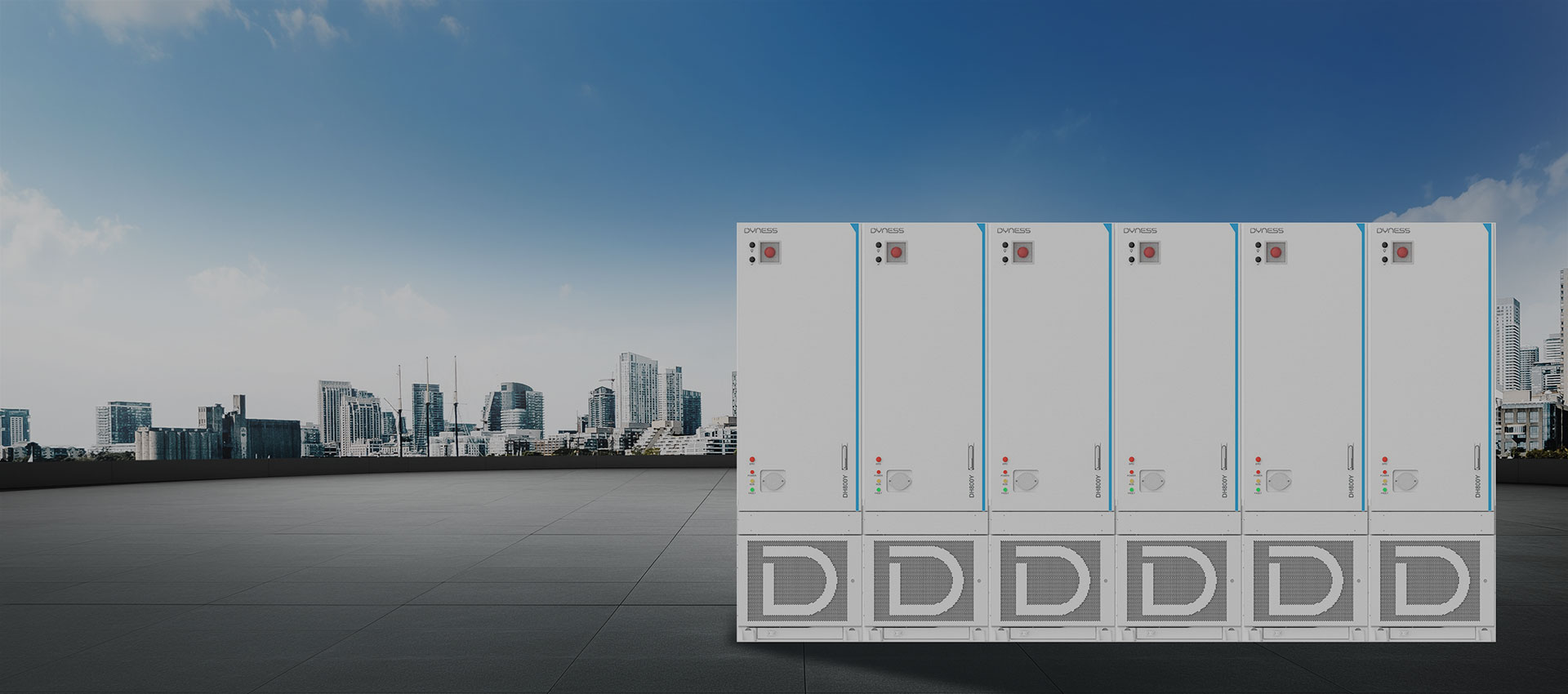
Large-scale power grids and centralized utility networks require high-capacity electrical assets to manage intermittent generation loads, enforce grid stability, and provide secondary frequency regulation. Deploying a heavy-duty Utility-Scale Liquid-Cooled Containerized BESS configuration enables regional power developers to absorb large amounts of wind and solar generation, reduce transmission curtailments, and secure massive block reserves.
Infrastructure asset planners focus heavily on container volumetric efficiency, electrochemical safety ratings, and systemic direct current (DC) thermal balancing parameters during early specification phases. Sourcing proper stationary hardware layouts shields localized distribution infrastructure from severe voltage deviations while lowering capital expenditures across multi-decade project operational lifecycles.

The Structural Mechanics of Large Scale Containerized Power Systems
Siting centralized energy repositories within industrial zones or substation footprints demands rigorous attention to rigid physical enclosure configurations and secure anchoring techniques. Standardized container frames simplify long-distance maritime shipping, domestic flatbed hauling, and heavy crane placement operations on-site. These thick metal enclosures house dense arrangements of cell racks, internal fluid lines, and primary power distribution blocks securely.
An established 20ft/40ft BESS Container Manufacturer enables heavy metal structures to fulfill strict international crash, weather resistance, and seismic compliance standards. Fully sealed outer frameworks reduce airborne debris, driving rain, and high humidity shifts from penetrating into fragile sub-assemblies. Secure physical buffering guarantees that utility-scale systems function quietly and dependably across diverse geographic climate zones worldwide.
Comparative Thermal Performance of Liquid Cooling and Forced Air
Gigawatt-scale infrastructure arrays generate tremendous volumes of localized internal thermal energy during prolonged bidirectional charging and discharging phases. Legacy forced-air ventilation layouts struggle to move massive heat loads evenly across dense storage matrices, which often forms problematic thermal gradients. These temperature variations cause adjacent cell strings to degrade unevenly, lowering the net useful capacity of the entire project footprint.
Transitioning to comprehensive liquid-chilled designs allows internal temperature variations to stay remarkably uniform across thousands of integrated cells. Circulating specialized coolants directly alongside internal cell chassis extractions removes thermal stress far more efficiently than standard ambient air circulation pipelines. Reducing localized thermal pockets increases full round-trip conversion metrics and preserves total asset health over extended timelines.
Modular Architecture and High Voltage Grid Connection Logic
Developing large energy fields requires modern power electronics capable of interfacing with localized high-voltage medium-voltage grid structures cleanly. Traditional non-modular block assemblies introduce severe installation bottlenecks by requiring extensive on-site component wiring, external plumbing, and long commissioning schedules. Pre-engineered electrical blocks simplify full utility integration into standard plug-and-play workflows.
The advanced DH800Y platform from Dyness addresses these connection demands by introducing a next-generation fully liquid-cooled, modular energy storage system. This versatile system features a 690V medium-voltage grid connection solution alongside a high-efficiency design that achieves a total system efficiency of 90%. Streamlining electrical conversion paths minimizes technical balancing losses and improves financial returns for global utility operators.
The modular approach also enables parallel scalability, allowing operators to expand capacity incrementally as project demands grow. This reduces costly over-provisioning upfront while maintaining consistent grid interface performance. For utility developers, reduced site wiring and pre-commissioned blocks translate into shorter deployment windows, faster revenue generation, and lower total installation labor costs.
Mitigating Footprint Constraints and Transportation Logistics In Front of Meter
Substation real estate and industrial park layouts represent premium structural footprints that cannot be misallocated or over-expanded. Heavy multi-megawatt installations often demand vast surface areas when using legacy low-density battery cabinets, which drives up underlying land development costs. Modern engineering teams prioritize compact stackable topologies to maximize volumetric capacity per square meter.
The customizable DH800Y product layout offers configurations ranging from 836kWh to 5MWh to satisfy a wide variety of project scales. This specialized structure delivers a substantial AC output power of 4.2 MW and a deep DC storage capacity of 16 MWh. High-density design allows project developers to scale capacities smoothly while reducing structural site construction and transportation overhead.
Ensuring Safety Through Intelligent Multi-Layered Suppression
Massive electrochemical blocks placed near high-voltage grid connections require the rigorous proactive technical safety controls. Modern storage enclosures utilize advanced internal monitoring circuits that track localized cell pressures, voltage fluctuations, and moisture boundaries continuously. Multi-tiered physical containment barriers isolate early technical anomalies before they can impact surrounding electrical infrastructure components.
To maximize facility safety, the solutions developed by Dyness incorporate active safety intelligence alongside multi-layer gas and water fire suppression architectures. Automated detection systems activate targeted safety countermeasures instantly without requiring manual site intervention from engineering personnel. Combining reliable lithium chemistry with responsive safety controls delivers an exceptional, climate-resilient solution for long-term power grids.
Conclusion
Successfully deploying utility-scale energy projects relies on combining high-voltage conversion efficiencies with robust structural enclosures and precise thermal management. Utilizing an advanced Utility-Scale Liquid-Cooled Containerized BESS platform enables network developers to secure grid stability while maximizing clean renewable power capture.
By working with a reliable 20ft/40ft BESS Container Manufacturer like Dyness to deliver the flexible DH800Y system, enterprises can deploy scalable, low-maintenance hardware solutions that drive the global energy transition forward
